Either a Russia-West ceasefire or an Eastern European war: Trump is not "cornering" Putin.
29-07-2026 17:36 Politics
1in.am On July 29, the U.S. Senate decided to "continue the procedural discussions" on a bill imposing sanctions against Russia, with 86 votes in favor and 12 against. This was reported by Reuters, which indicated that the document would allow the U.S. president to impose direct sanctions on leading entities in the Russian economy and banking system. Donald Trump will have the ability to apply a 100 percent tariff on countries that buy large amounts of oil from Russia.
The bill has undergone "significant changes." Specifically, the initial version suggested that the U.S. president could "impose tariffs of up to 500 percent." The softening is likely related to the priority of not creating more serious trade and economic complications with China and India. Politically, there has also been a certain "retreat," as earlier information circulated that the Senate would vote in favor of the bill and present it for approval by the House of Representatives.
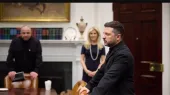
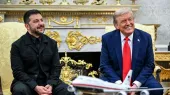
Two major events await the U.S. president ahead of the midterm elections in Congress: the state visit of Chinese leader Xi Jinping to the U.S. and the "G20" summit. In this situation, it seems that Donald Trump is striving not to create additional tensions. Especially since, as understood from the information surrounding the meeting with Ukrainian President Zelensky, he is preparing to offer Vladimir Putin "new principles and ideas for Ukrainian settlement."
In the "front" of the Ukrainian settlement, a situation has arisen where it is clear that Trump either "could not" or "did not want" to convince Zelensky that Putin's preconditions for ending the war "must be met." In this regard, the significance of the European "trio"—England, France, and Germany—is undoubtedly very high. It is not at all coincidental that Zelensky traveled to Washington via "London transit."
If we theoretically accept that Russian Foreign Minister Lavrov is correct in asserting that NATO member European countries are "pushing Trump to withdraw from the Anchorage agreement," then the American "new principles and ideas" to be presented to Russia must be agreed upon in advance with at least London, Paris, and Berlin. In this scenario, Russia would indeed find itself at war with the entire "collective West."
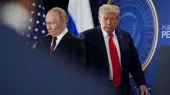
This could lead to either tangible de-escalation and a "reloading" of the negotiation platform, or, conversely, at least an expansion of the war in the "Eastern European battlefield." The "pause" in the Senate regarding the adoption of the bill imposing sanctions against Russia suggests that Donald Trump is not "cornering" Putin. Whether the Kremlin will view this as a "diplomatic window" or as Trump's "strategic retreat" remains to be seen.
* This text was automatically translated by Artificial Intelligence (AI).