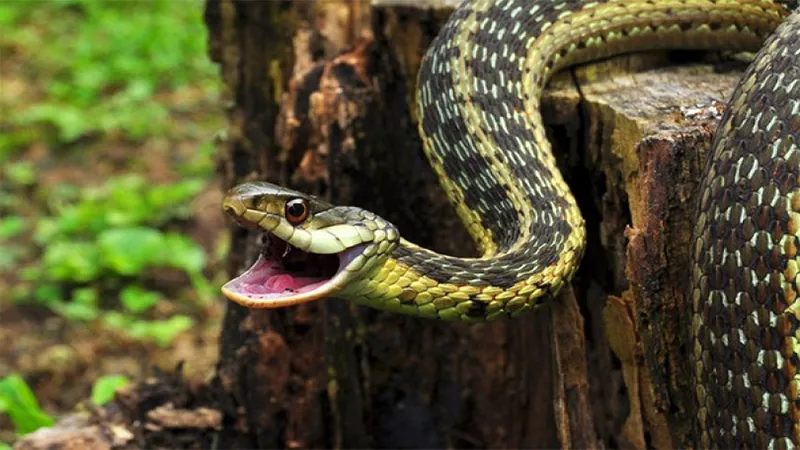
In the first half of 2026, 315 snakes were discovered in the republic, of which 50 were venomous.
16-07-2026 10:30 Armenia Social
In the first half of 2026, there were 629 reports of snake sightings in Armenia, which is an increase of 74 or 13.3 percent compared to the same period in 2025.
In response to a query from «Armenpress», this information was provided by the Ministry of Internal Affairs of the Republic of Armenia.
According to the ministry's data, 315 snakes were discovered in the republic during the first half of 2026, of which 50 were venomous. In the same period of 2025, 278 snakes were found, 62 of which were venomous. The highest number of reports were recorded in Yerevan with 268, followed by Kotayk Province with 104 and Ararat Province with 53. In Syunik, there were 46 cases, Aragatsotn had 45, Tavush 37, Armavir 35, Vayots Dzor 22, Shirak 11, Lori 5, and Gegharkunik had 3 cases. At the same time, a decrease in cases was noted in Armavir, Vayots Dzor, Shirak, and Lori provinces. The highest relative increase was recorded in Syunik Province at 64.3 percent, followed by Ararat Province with a 35.9 percent increase. The largest relative decrease was observed in Shirak Province at 31.3 percent.
According to Marine Grigoryan, head of the Toxicology Service at the Neonatal and Pediatric Resuscitation, Toxicology, and Anesthesiology Clinic of the Muratsan University Hospital Complex, if there is a snake bite, monitoring must be conducted in a hospital setting in case of pain and bite marks. «In the case of a snake bite, it is not advisable to apply a constrictive bandage, perform mouth suction, or apply ice, as these interventions can complicate the effects of the venom if there is local tissue damage due to the toxin,» Grigoryan said.
She noted that after a snake bite, it is essential to assess the bite marks to determine the type of snake involved, if possible. «Usually, there is one or two visible wounds; if the snake is venomous, the limb starts to swell rapidly. In that case, the limb should be immobilized, as movement promotes the rapid spread of the venom. If the snake is not venomous, the victim and those assisting them may not be able to assess this; however, the victim should remain under medical supervision. If there is local swelling, blister formation at the bite site, and persistent pain, monitoring is necessary, and the need for antivenom injection should be determined,» she noted, adding that administering antivenom as quickly as possible after a snake bite is crucial to prevent complications.
Marine Grigoryan stated that a snake bite can lead to a range of complications, including local tissue damage, destruction of red blood cells, and muscle tissue breakdown. She emphasized that continuous medical supervision and appropriate treatment are necessary in such cases, with the most effective measure being the administration of antivenom.
The toxicologist mentioned that the recovery process depends on the degree of poisoning and injury, as well as the age and weight of the victim. She noted that young children are more vulnerable to the effects of venom, so the symptoms of intoxication are often more pronounced in them. It is also important whether the snake was an adult or a juvenile, as smaller snakes typically contain less venom, and their bites usually manifest milder symptoms.
* This text was automatically translated by Artificial Intelligence (AI).
Warning: include_once(pages/inc_sidebar_livestream_youtube.php): Failed to open stream: No such file or directory in /home/u247475421/domains/poll.nt.am/public_html/pages/page_news_new.php on line 244
Warning: include_once(): Failed opening 'pages/inc_sidebar_livestream_youtube.php' for inclusion (include_path='.:/opt/alt/php83/usr/share/pear:/opt/alt/php83/usr/share/php:/usr/share/pear:/usr/share/php') in /home/u247475421/domains/poll.nt.am/public_html/pages/page_news_new.php on line 244


 ENGLISH