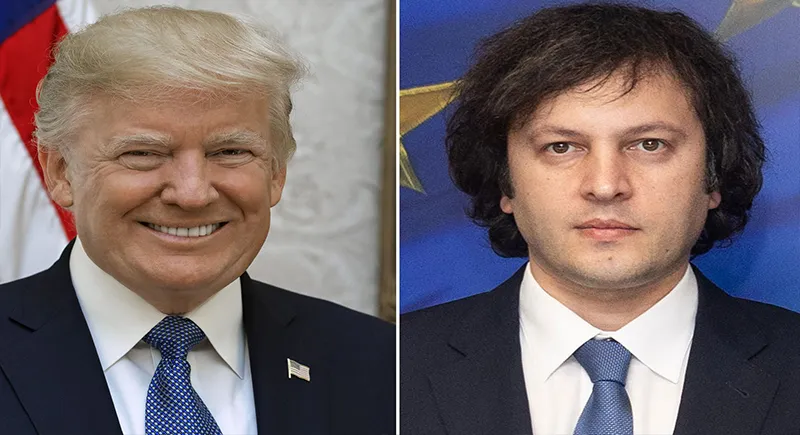
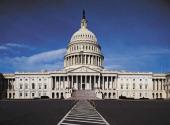
The US and Georgia have not reached an agreement. Washington emphasizes the importance of freedom of speech.
28-07-2026 15:10 Politics
1in.am We are concerned that the Georgian government has created a Department for Combating Hate Speech; the best response to falsehoods and erroneous views is broader freedom of speech, not the imposition of silence. This is how the U.S. Embassy in Tbilisi reacted to the court's decision to impose a fourteen-day administrative detention on journalist Vakha Sanaya.
The Tbilisi City Court made a ruling against Sanaya after he refused to pay a fine of 600 lari imposed for "insulting" the Speaker of the Georgian Parliament, Papuashvili, on social media. The journalist did not attend the court hearing and had previously stated that "the court's decision does not interest him," and that he will "say and write what is necessary on air and social media; no one can silence a person."
The U.S. Embassy in Tbilisi clarified in response to claims by Radio Liberty that the Trump administration had "clearly stated to the Georgian authorities that the United States considers freedom of speech a fundamental basis for public life and is firmly against censorship and restrictive laws that are used to force people with undesirable views to remain silent."
Accordingly, "political stability and ensuring a wide representation of diverse views are the factors that make Georgia a reliable partner for American investments, security, and long-term strategic cooperation."
In fact, the U.S. Embassy in Tbilisi has indicated that the Georgian authorities are "restricting freedom of speech through laws aimed at silencing people with undesirable views and creating a censorship body within the state administration," while conditioning further Georgian-American strategic cooperation on "removing obstacles."
Last June, a delegation from the U.S. State Department visited Tbilisi for a three-day trip. There was an impression that, unlike the European Union, the United States does not raise issues of democracy and the protection of human rights and civil liberties with the Georgian government. Undoubtedly, the decision to impose administrative detention on journalist Vakha Sanaya is merely a pretext for the U.S. Embassy's strong response in Tbilisi. It appears that Washington and Tbilisi have not reached an agreement on key issues. To what extent this is related to Russian-Georgian and Georgian-Chinese relations remains to be speculated.
* This text was automatically translated by Artificial Intelligence (AI).


 ENGLISH