Addressing a person by their nickname or their clerical name is not a matter of insult or politeness; it is a question of political, perhaps even ecclesiastical, stance. - Rubinyan
Addressing a person by their nickname or their clerical name is not a matter of insult or politeness; it is a question of political, perhaps even ecclesiastical, stance. - Rubinyan
07-08-2026 12:56 Armenia Politics
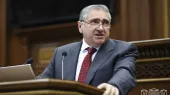
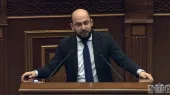
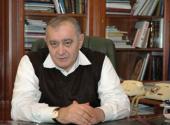
tert.am. An insult is not a subjective matter; it is objective. For example, no one will question that, say, it is not acceptable to stand here and call someone a scoundrel; that is objectively an insult. After the MP of "Strong Armenia," Davit Ghazinyan, stated that addressing the Catholicos of All Armenians by his baptismal name is perceived as an insult or provocation, Ruben Rubinyan decided to explain from the position of the Speaker of the National Assembly what can be considered an insult:
"But addressing a person by their baptismal name or by their clerical name is not a matter of insult or politeness; it is a matter of political, or perhaps even ecclesiastical, stance."
"Now, a situation may arise where, for example, every time the person you mentioned is addressed by their clerical name, the 'Civil Contract' faction, which believes that the person you mentioned has violated the covenant of celibacy and therefore cannot be addressed by that name, may also consider it a provocation."
"I suggest not going down that path, and yes, you all rightly can and should expect that no insults will be heard from this podium, and I will do everything to ensure that this is the case, but let’s agree that an insult is what is objective."
"What is a matter of political stance is no longer an insult. One cannot inherently consider addressing someone by their baptismal name as an insult. Can you disagree with that? Yes, it is your right, but please do not disrupt the sessions," he noted.
* This text was automatically translated by Artificial Intelligence (AI).