Can Armenia discuss the export restrictions on Russia within the EAEU? EAEU regulations
25-07-2026 10:35 Armenia Press of Diaspora
sputnik The Ministry of Economy of Armenia has not yet commented on whether this platform can be used for discussions.
Due to the restrictions on the import of Armenian goods to Russia, the question of discussing this decision by the Armenian authorities has become relevant.
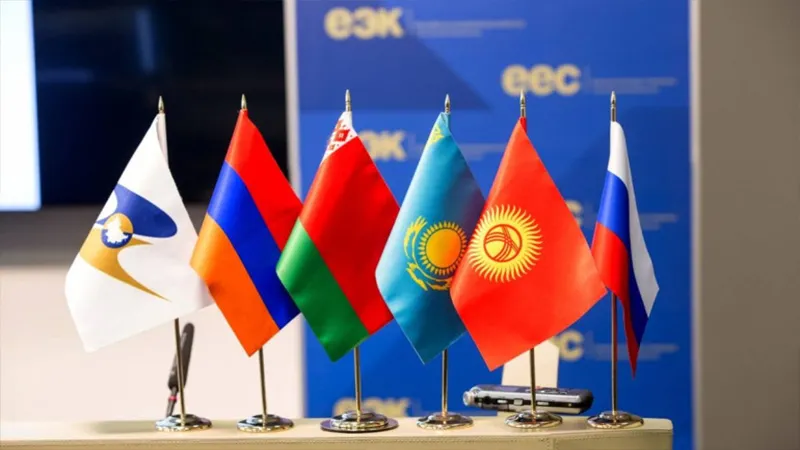
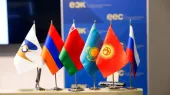
Discussions can be held both bilaterally at the Armenian-Russian level and within the framework of the Eurasian Economic Union, especially since there is a procedure in the EAEU that allows member countries to raise the issue of restrictions in mutual trade (methodology for qualifying obstacles in the internal market of the Eurasian Economic Union).
In response to a query from Sputnik Armenia, the Ministry of Economy of Armenia stated that negotiations on the mentioned issue are ongoing in various formats, the details of which are not currently subject to publication.
In this context, let us recall what opportunities the Eurasian Economic Union provides for negotiations according to the aforementioned methodology.
Any member country of the EAEU, as well as private enterprises of the member countries, can raise the issue of trade restrictions imposed by another member country (or countries). The Eurasian Economic Commission (EEC, the executive body of the EAEU) can respond to applications and also conduct independent monitoring. These issues are discussed by the EEC Minister for Internal Markets and Information and Communication Technologies (currently held by Varos Simonian). The application is sent to the relevant divisions of the EEC. If sufficient information is provided in the application indicating a possible violation, the issue is accepted for consideration.
The procedure for reviewing applications: within 7 calendar days, the EEC bodies present their opinion on the application. After that, within 15 calendar days, a preliminary conclusion is sent to the governments of the member countries. Subsequently, within 15 days, representatives of the EAEU countries conduct expert consultations. The EEC summarizes the results and sends the conclusion to the member countries.
In case of disagreement: if there is a disagreement with the EEC conclusion, the notifying country sends its counterarguments within 30 days. Within 15 days from the receipt of these, the EEC authorized department organizes consultations for the second time. If it turns out that there is no new information regarding the essence of the issue in the objections of the applicant country, the examination is terminated. Otherwise, a revised conclusion is prepared within 15 days.
The total timeframe for discussing applications should not exceed 60 calendar days, with a possibility of extension up to 70 days.
EEC's independent examination: If the EEC identifies the risk of obstacles not based on an application but independently, a notification is sent to the relevant country. After that, within 15 days, a decision on the discussion of the issue is prepared in the EEC Collegium (Council of Ministers).
Then, within 7 calendar days, the EEC legal department organizes a consultation with the participation of officials from member countries.
If a country acknowledges the existence of an obstacle and expresses a willingness to eliminate it within 6 months, it describes its approaches to resolving the issue. After that, the discussion of the issue is postponed for up to 6 months, after which it is included in the agenda again.
If the country disagrees, the EEC records a violation of free trade by including it in the list of trade barriers and restrictions (currently there are 35 of them).
Let us recall that Rosselkhoznadzor began to restrict the import of goods from Armenia to Russia starting in May, initially fish and flowers, and then certain types of fruits and vegetables. From June 2, Rosselkhoznadzor restricted the import of stone fruits such as cherries, apricots, plums, peaches, nectarines, and grapes from Armenia.
The agency explains these decisions by the detected violations and the necessity of ensuring phytosanitary safety. It should be noted that Russia is the main market for Armenian agricultural products, accounting for more than 90 percent of Armenia's exports.
* This text was automatically translated by Artificial Intelligence (AI).


 ENGLISH